
Before reading this, I would strongly recommend reading this piece to familiarise yourself to the Fermi Paradox, if you haven’t already! https://lukewhostalking.family.blog/2020/11/14/introduction-to-the-fermi-paradox-the-drake-equation/
Water is the solvent for all life on Earth, therefore it is in our best interests to assume it is most likely the universal solvent for life. We already know that water is common in the universe, and indeed many bodies in our own solar system such as Europa and Ganymede have their own subsurface oceans, which may harbour some form of life. Other bodies such as Mars and Venus were once thought to have their own large surface oceans in their distant past, which they have since lost for almost juxtaposed reasons. If our search for life is centred on water, and the presence (or lack) of it on a world, then surely our search for exocivilisations should also be concerned with it. However, as we know, life on Earth originated within the ocean, specifically around deep hydrothermal vents, and eventually evolved to live and survive out of water, partly by chance and partly due to the very nature of Earth being covered partly by water and partly by land. On a planet or moon covered entirely by water, or indeed in subsurface oceans covered completely by an ice shell, life will surely not have evolved to live or survive of an oceanic environment. Therefore, could this be a solution to the Fermi Paradox?
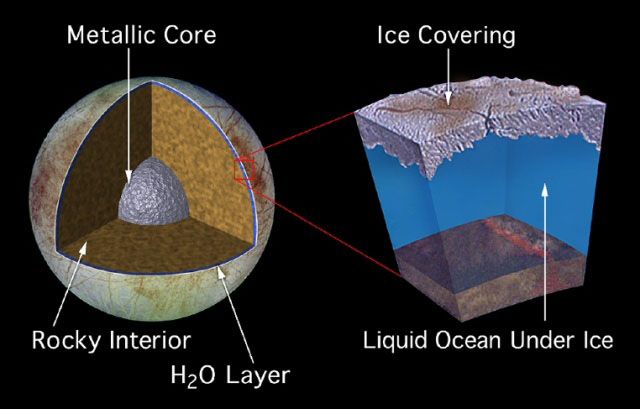
Could intelligence evolve within life forms which inhabit only oceanic worlds? The simple answer is, yes! On our own planet, we have several examples of intelligence arising completely within oceanic life. Of course, this is open to interpretation and scrutiny over what is considered intelligent life, however there are several life forms such as Dolphins and Octopi which are known to have relatively high levels of intellect. This, in turn, shows that an oceanic environment is certainly not a deal breaker when it comes to developing intelligence. Moreover, in dolphins, they even build social groups not too distant from what one may consider a society. If water-based life is common in the universe, one may imagine that life resembling dolphins or Octopi -both suited to aquatic life – is also common. Therefore, this may be a relatively simple solution, but a solution nonetheless, to the Fermi Paradox. For example, dolphins are intelligent, yet their environment and physiology make it virtually impossible to develop a civilisation capable of making a visible and detectable mark on the universe. Trying to build a radio telescope or spacecraft underwater with only fins is likely impossible, even if a more intelligent analogue of a dolphin exists somewhere, they are severely limited by their physiology favouring a streamlined, aquatic existence. Also, if a civilisation exists on a Europa-like world in a subsurface ocean, apart from living in almost perpetual darkness, their ‘universe’ would likely end at the ice shell. They would be unaware of what was above, and their scientists would be more concerned with what- if anything- lay beyond the ice shell than whether other civilisations existed. Earth is very much a fluke in our solar system when it comes to liquid water surface oceans. We know that Mars and Venus almost certainly had liquid water oceans at some point, however, unlike Earth, they didn’t hang onto them long enough to develop intelligent life, meaning that, if this event is the norm on a universal level, subsurface oceans which are far more long lasting are more likely to develop intelligent life. Our planet is also unique and favourable to advanced life due to the presence of a large moon and plate tectonics, and without both (relatively rare features, our neighbour Venus has neither) Earth itself may simply be a water world without land, meaning any life would have no other option but to be oceanic.
Humanity, and life in general on Earth, may be unusual in not being water-based. If a oceanic civilisation out there does exist, they may simply be undetectable.
The fluke of intelligence

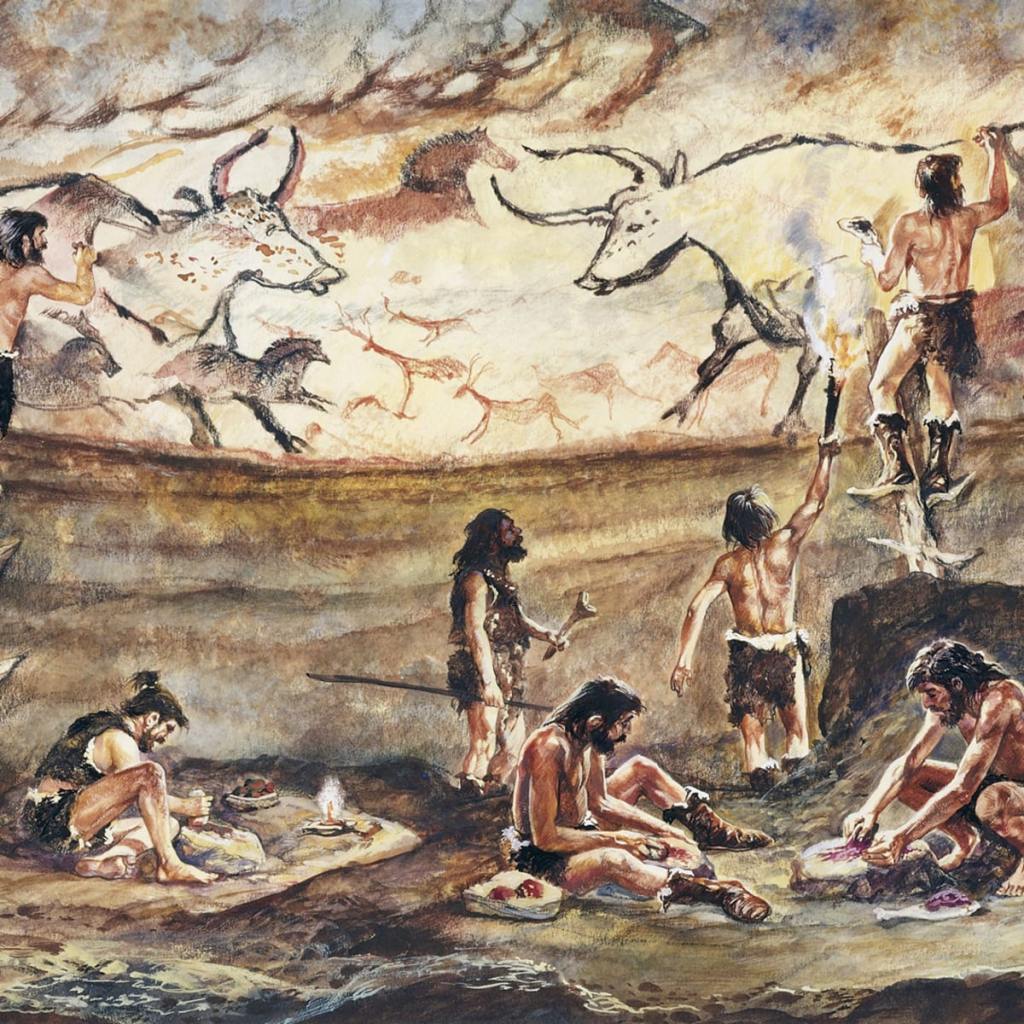
Throughout the history of our planet, despite there being many clever species, only one has evolved and developed sufficiently enough to build advanced science and reach out into space. Out of millions upon millions of species over billions of years, only humanity has built a radio telescope or beamed out signals capable of being picked up by prying eyes on distant worlds. If high levels of intelligence was an inevitability of evolution, there would be countless human-level, or higher, intelligent species on our planet alone. But there is only one, meaning that extreme intellect must be a fluke rather than an inevitable end point of evolution. Could have other species such as dinosaurs or large insects which existed hundreds of millions of years ago eventually have evolved a level of intelligence, and physiology, capable of building an advanced civilisation if they weren’t wiped out through major events? Possibly. Although the point remains, they didn’t. Their demise actually led to the conditions for the evolution of humanoids. Indeed many, many different factors had to align in order for humanoid species to evolve, many of them simply by chance such as asteroid impacts and also changes in the climate of the planet caused by the Milankovitch cycles. Mammals only arose after the demise of the dinosaurs, meaning that if the asteroid which wiped out the dinosaurs missed slightly, mammals, and subsequently humans, may never have evolved. Moreover, for reasons not entirely known, oxygen levels on Earth increased around the same time mammals began to develop, meaning brain sizes grew comparatively larger than before. At the time of the early primates, roughly 20 million years ago, the climate on Earth began to change, possibly due to the Milankovitch cycles, meaning food sources for these species became harder to come by, therefore it became essential to have a larger brain, capable of adapting to the rapidly changing environment, in order to survive. Smarter mammals adapted, evolved and survived whereas less intelligent mammals died out. This change was essentially a catalyst in driving forward the evolution of early primates to eventually develop into early man. Early humans however, weren’t the only intelligent humanoid creature to arise out of this period. We often as the question ‘are we alone?’ in the context of are there any other non-human intelligent species. At one point, the answer was no. Early homo-sapiens lived alongside other intelligent but distinct humanoid species such as Neanderthals. Some studies even suggest that there was a period when as many as three separate species of hominid co-existed, homo-sapiens, Neanderthals and Homo-Erectus. Curiously, one thing that separated early humans from these other species is art. Whilst there is some evidence of limited instances of art created by Neanderthals, the vast majority of cave art dating from pre-history is thought to have been created by humans. The implications of this are more relevant than it seems. Creativity is a very advantageous trait in survival and advancement, and art requires a very high level of creativity. Whilst other humanoids may have also been creative, they simply didn’t have the level of creativity displayed by humans, making their continued survival more difficult.
With our own history, we therefore know of at least three species which developed a level of intelligence and complexity to, given time, create a civilisation capable of leaving a mark on a galactic level. However, the point stands that only one ended up doing that, possibly due simply to the creativity of our species. On a universal level, whilst life, and possibly complex life, could be relatively common in the universe- given the evidence of intelligent life on Earth being extremely rare and humanity evolving almost as a fluke, could there be countless worlds out there with fairly complex life, which simply haven’t provided to conditions necessary for intelligence to develop? And if intelligence had evolved on these worlds, were conditions harsh enough for these species to develop a level of creativity akin to humans? There may be countless worlds out there with small societies of intelligent species, with complex emotions and favourable physiology, but with favourable conditions meaning that they simply didn’t need to evolve the need to be creative, to adapt and survive, as humans did on our constantly changing world. They may have created fire, learned to make simple homes and then simply lived comfortably on a stable world free from hazards such as climate change or predators, meaning they have little need to move beyond a stone age level of development. A society like this would simply be impossible to detect over a galactic distance, and they wouldn’t have the technology to detect or contact us as they simply have never had the need to develop further. A species not evolving, or barely evolving, after a certain point, because they have little need to, is not unknown on our planet. Some species, such as crocodiles and various sea-dwelling creatures, have barely changed in hundreds of millions of years because they, by luck, didn’t need to. Whist Earth’s environment changed, they themselves were unaffected by this change, so there was little need for evolution or natural selection to take place.

Whilst we know advanced civilisations on Earth has overall been limited by number to one species, it has also been limited by time. Our planet is over 4.5 billion years old, and, as far as we know, intelligent species only arose around 2 million years ago. This is a tiny, tiny window in the history of life on this planet, and an even smaller window in the universe as a whole. Narrowing it down even smaller, humans have only developed technology capable of displaying ourselves as a technosignature to other civilisations in the last 150 years or so, an even briefer blink of an eye in astronomical terms. Could detectable civilisations only exist long enough to be detectable as long as an astronomical blink of an eye? And if so, why? That is something for another article!
 Luke’s Astronomy and Astrobiology blog